

Drone Inspection
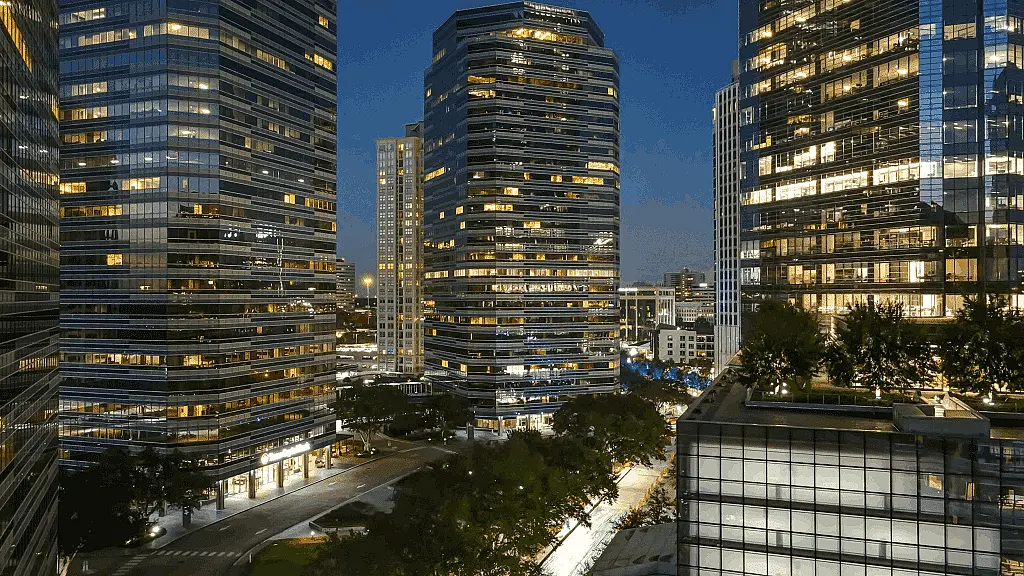
Houston’s industrial drone inspection team for refineries, utilities, construction, and commercial assets. FAA Part 107 pilots, insured. Thermal (radiometric), photogrammetry, and detailed reporting in 24–72 hours.
Our services include
and More…
From Real Estate and Roofing Inspections to Off Shore Platforms and Construction. We have what it takes to provide air support to all industries.
Our Drones are capable of recording High Definition video with extreme clarity and detail We also offer thermal inspection utilizing FLIR technology. Learn More
Contact Us to schedule your flight. We can accommodate emergency situations and offer rush service.
We are ready for launch! We respond to most contact requests in a few hours! Submit a contact request or just drop us a line!
Using Aerial Photos, Maps and 3D Models for Roof Inspection, Insurance Assessment, and Solar Panel Installation & Maintenance
We use advanced drone technology with thermal and high-resolution cameras to inspect large solar and industrial sites quickly and accurately.
Our flights capture precise temperature data and detailed imagery, allowing us to create full-site maps, 3D models, and thermal overlays.
We identify issues like hot spots, damaged panels, and system inefficiencies, then deliver clear reports and data your team can use immediately for maintenance and repairs.
1. High-Resolution Maps and 3D Models in Minutes
We plan flight lines (nadir and oblique) with RTK/PPK positioning to hit the target ground sample distance and 70–85% overlap. On site, we check focus, exposure, blur, and coverage before we pack up. The imagery is processed into an orthomosaic, a DSM/DTM, and a textured mesh/point cloud, all tied to your coordinate system. Exports include GeoTIFF/COG, LAS/LAZ, OBJ/FBX, and KML as needed.
2. Accurate and Consistent Measurements
Accuracy is anchored with survey control—GCPs/check points and, where appropriate, scale bars. We calibrate the camera model to reduce distortion and report error metrics (RMS, standard deviation). From the point cloud and mesh we extract areas, lengths, parapet heights, roof pitch/slope, and penetration counts. For tighter tolerances or heavy veg, we supplement with UAV LiDAR.
3. Visual and Thermal Inspection from the Safety of the Ground
Long-range zoom reveals small details without putting people at height. Radiometric thermal sensors record a temperature value per pixel; before flying we set emissivity, reflected apparent temperature, and basic atmospheric terms, and we schedule for stable sun and low wind so hotspots stand out. Deliverables include the native radiometric files, a co-registered thermal ortho, and an annotated anomaly layer.
4. In-Field Analysis and Reporting
Inspectors mark findings in the field on a tablet—pins, sketches, and notes—then sync to a secure workspace. Automated routines (change detection, counts, threshold-based thermal flags) speed up the review. The final package includes a CSV/PDF issue list with location and severity, web viewers for maps/models, and exports for CMMS, BIM, or GIS.
5. A Rich Set of Data to Aid the Design Process
Each flight produces a survey-grade point cloud that’s useful for as-built checks, clearances, drainage planning, and quantity takeoffs. Designers can bring DXF/DWG/OBJ into CAD/BIM, trace edges and penetrations, build a bill of materials, and compare future scans to the baseline for change tracking—with an audit trail of how the numbers were produced.