

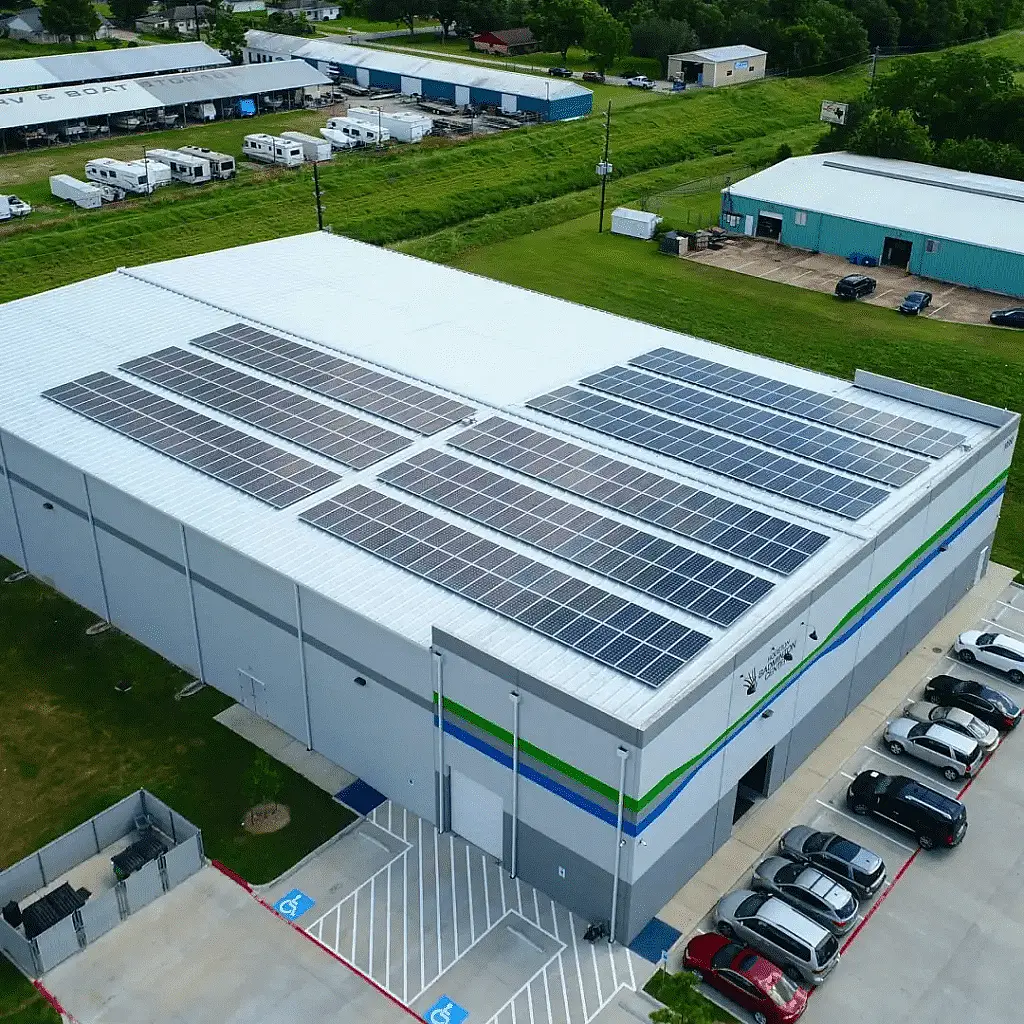
 A solar site can look fine from the ground and still be losing production across dozens of modules. By the time those losses show up clearly in performance reports, the revenue hit has already started. That is why solar farm thermal inspection has become a practical operations tool, not just a diagnostic extra.
For utility-scale and commercial operators, the value is straightforward. Thermal data shows where heat signatures point to electrical imbalance, damaged cells, failed bypass diodes, connection issues, and inverter-related problems that are difficult to isolate through visual checks alone. When captured correctly, it gives operations teams usable evidence they can route directly into maintenance planning, warranty review, and asset performance analysis.
What solar farm thermal inspection actually detects
Thermal inspection is often described too broadly, which creates the wrong expectation. It does not replace every electrical test or every ground verification step. What it does well is identify temperature anomalies across large areas quickly, so teams know where to focus field resources.
At the module level, a thermal survey can reveal hot spots, cell mismatch, cracked cells, failed bypass diodes, ribbon issues, and localized heating tied to damage or degradation. At the balance-of-system level, it can also help identify overheating connectors, combiner box concerns, fuse issues, and irregular conditions around inverters and associated equipment. The exact findings depend on irradiance, system loading, environmental conditions, and how the mission is flown.
That last part matters. A thermal image by itself is not decision-grade data. If the inspection is not planned around proper weather windows, flight altitude, camera calibration, and asset geolocation, the output may look impressive but offer limited operational value.
Why aerial thermal inspection makes sense at solar farm scale
On a large solar farm, manual inspection creates a simple math problem. Too much ground to cover, too many assets to review, and too much labor tied up in low-efficiency fieldwork. Even when a team uses handheld thermal tools, the process can be slow, inconsistent, and disruptive if there are thousands of modules spread over a broad footprint.
Aerial thermal inspection changes the coverage model. A drone-based workflow allows operators to scan large sections of an array in a fraction of the time required for manual review, while preserving image consistency and precise location tagging. For owners and asset managers, that means faster identification of underperforming sections and less delay between anomaly detection and corrective action.
The speed advantage is real, but speed is not the only reason commercial buyers use it. The better reason is prioritization. Instead of sending technicians to inspect every possible issue, teams can target assets with documented thermal anomalies first. That reduces unnecessary field time and helps maintenance crews work from evidence rather than assumption.
When a solar farm thermal inspection delivers the best data
Thermal results are highly condition-dependent. The best inspections are not scheduled just because a drone is available or because someone wants updated imagery. They are scheduled when site conditions support reliable interpretation.
Solar modules need enough solar loading for defects to present as meaningful thermal contrast. Early mornings, heavily clouded periods, or unstable irradiance can reduce anomaly visibility. Wind can also affect readings by cooling surfaces and muting thermal differences. In practice, the inspection window should be selected around site conditions that support clear thermal separation and repeatable results.
There is also a timing question tied to the purpose of the mission. If the goal is baseline quality control after installation, the inspection should align with commissioning and punch list workflows. If the goal is operational maintenance, it may be part of a recurring inspection cycle or triggered by SCADA alerts, production variance, or suspected string issues. If the goal is warranty support, image quality, documentation standards, and location accuracy become even more important because the findings may be reviewed by third parties.
This is where experienced flight planning matters. A useful thermal mission is not simply a matter of flying over panels and collecting images. It requires an inspection plan built around asset type, array layout, expected defect profile, and the decisions the client needs to make afterward.
What decision-makers should expect from the deliverables
Commercial clients should ask a simple question before commissioning any inspection: what will our team be able to do with the data the next day?
The strongest deliverables are not just folders full of thermal photos. They include georeferenced findings, anomaly categorization, RGB context imagery, and reporting that supports maintenance dispatch or engineering review. In many cases, the most useful output is an organized defect register tied to clear map locations and image references, so technicians can move directly to verification and repair.
That is especially important on utility and commercial sites where ownership, operations, EPC responsibilities, and maintenance contracts may involve multiple stakeholders. A vague thermal report creates friction. A structured report with exact asset locations, severity indicators, and image-backed documentation supports quicker alignment between field teams, asset managers, and compliance or warranty personnel.
For some clients, trend analysis also matters. A one-time inspection is valuable for finding current issues, but recurring inspections create a stronger asset management record. Comparing anomaly patterns over time can show whether an issue is isolated, stable, or expanding. It also helps operators measure whether maintenance actions resolved the thermal condition or whether additional intervention is needed.
Common limits and trade-offs in solar farm thermal inspection
Thermal inspection is powerful, but it is not magic. A hot module does not always point to the same root cause, and not every fault creates a thermal signature that is easy to interpret from the air. Some anomalies need follow-up electrical testing, IV curve tracing, or hands-on verification before a repair decision is made.
There is also a difference between detection and diagnosis. Thermal imaging is excellent for surfacing probable problem areas. Root cause confirmation may still require site technicians or engineering review. That is not a weakness of the method. It is simply how good inspection programs work – broad, efficient detection first, then targeted confirmation.
Resolution is another trade-off. Flight altitude, sensor quality, and array configuration all affect what can be seen clearly. Flying lower may improve detail but reduce productivity. Flying higher may increase coverage but limit confidence on smaller anomalies. The right balance depends on the site and the inspection objective.
And while automation has improved data capture, interpretation still matters. False positives can happen. Reflections, environmental effects, soiling patterns, or transient conditions can distort what appears to be an electrical issue. For commercial buyers, that means the provider’s operational discipline is just as important as the hardware being used.
Where this fits in an O&M and asset management program
The best use of solar farm thermal inspection is as part of a broader performance and maintenance workflow. It works well during commissioning, after severe weather events, before warranty deadlines, during annual preventive maintenance cycles, and when production data suggests unexplained underperformance.
For portfolios with multiple sites, it can also support smarter budgeting. Rather than allocating maintenance resources evenly across all locations, owners can direct spend toward the sites and asset groups showing measurable thermal anomalies. That is a better use of labor and a more defensible approach to asset preservation.
In Texas, where heat, hail exposure, dust, and large-scale solar development all shape operating conditions, inspection frequency and timing often need to reflect local realities. Not every site requires the same cadence. A newly commissioned project, an aging array, and a storm-impacted facility should not be managed with the same inspection assumptions.
That is why the service provider matters. Drone Services Texas approaches these missions as inspection work, not aerial content capture. The goal is to deliver engineering-ready outputs that help operations teams locate problems, reduce field guesswork, and act faster.
Choosing the right inspection approach
If you are evaluating providers, the real differentiator is not who can fly a thermal camera. It is who can deliver usable high-accuracy precision data in a format your team can work with immediately. That includes FAA-compliant operations, safe mission planning, repeatable capture methods, clear anomaly reporting, and a practical understanding of how solar O&M teams actually respond to findings.
A good inspection should shorten the path between discovery and action. It should help you verify risk, focus technician time, document asset condition, and protect performance across the site. If the output cannot support those decisions, the mission was incomplete no matter how good the imagery looks.
On a solar farm, small faults become portfolio-level losses when they sit too long. Thermal inspection gives operators a faster way to see what the site is really doing, while there is still time to fix it.