

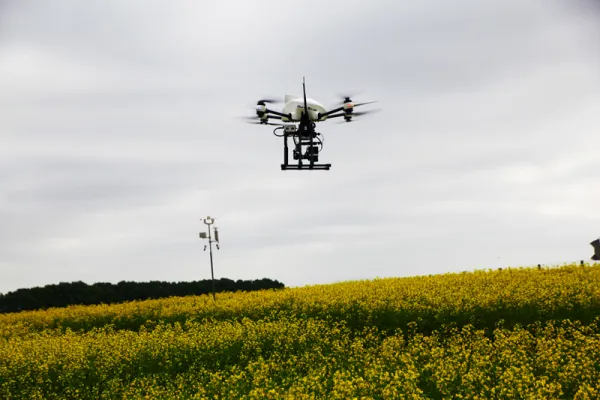
 A loose bracket, a damaged antenna mount, or a missing bolt 250 feet up can turn into service disruption, a safety issue, or an expensive emergency callout. That is why cell tower drone inspection has become a practical tool for telecom operators, tower owners, engineers, and contractors who need accurate visibility without waiting on a full climb crew for every question.
For the right scope, drones do more than capture photos. They provide decision-grade visual documentation that helps teams verify asset condition, prioritize repairs, support maintenance planning, and document work before and after a crew mobilizes. The value is speed, but speed only matters when the data is clear enough to act on.
What a cell tower drone inspection is actually for
A cell tower drone inspection is best understood as a targeted data capture operation for elevated telecom assets. The goal is not just to get aerial footage. The goal is to collect usable high-resolution imagery and video of structural components, mounts, antennas, lines, platforms, and surrounding site conditions so stakeholders can make field decisions with less uncertainty.
That distinction matters. A tower owner may need to assess corrosion on a monopole, verify the condition of appurtenances after a storm, document a tenant installation, or evaluate whether a suspected issue warrants a technician climb. An engineering team may need a detailed visual record to support structural review. A contractor may need progress documentation during equipment upgrades. In each case, the output has to support an operational decision, not just look good in a report.
Where drone inspection fits – and where it does not
Drone inspections are highly effective when the task is visual verification, general condition assessment, change detection, or pre-climb planning. They can sharply reduce the number of unnecessary climbs by showing whether a site issue is obvious, urgent, or likely to require a hands-on follow-up.
They are also useful after severe weather, during portfolio-level condition reviews, and before and after maintenance work. If you manage multiple assets, the ability to document several sites in a compressed timeframe can improve how quickly your team moves from observation to action.
That said, not every tower inspection can be replaced by a drone. If a scope requires torque verification, direct contact testing, detailed electrical work, or close tactile assessment, a qualified tower crew still has to be involved. The smart approach is not drone versus climber. It is using drone data to reduce risk, tighten the scope, and send the right people to the right issue with better information.
Why cell tower drone inspection is gaining ground
The biggest reason is simple: climbing is expensive, time-sensitive, and inherently higher risk. If a remote visual inspection can answer the first round of questions, operations teams can avoid sending a crew up the structure just to confirm what is already visible.
There is also a documentation advantage. Traditional site notes are useful, but high-resolution imagery gives owners, carriers, engineers, insurers, and contractors a common visual record. That helps when teams are spread across regions and decisions are being made quickly.
For asset managers, consistency matters as much as speed. A standardized drone inspection workflow creates comparable records across sites and over time. That is especially valuable when you are tracking deterioration, monitoring repair quality, or supporting capital planning across a broad portfolio.
What data stakeholders usually need
The best deliverable depends on who will use it next. A field operations manager may need annotated close-ups of mounts, feed lines, and visible structural concerns. An engineer may need image sets organized by elevation zone and component type. A tower owner may want before-and-after documentation tied to maintenance events.
In most cases, the useful output includes high-resolution stills, stabilized video passes, overview imagery of the compound and access conditions, and organized file delivery that makes review efficient. If thermal or other specialized payloads are relevant to a specific scope, they can add another layer of insight, but only when the inspection objective supports it.
This is where commercial drone service quality separates itself. The flight is only one part of the job. The real value is in planning the capture around the decisions the client needs to make afterward.
Safety, compliance, and flight constraints
Telecom sites are not simple environments. Towers create vertical obstacles, RF conditions may need review, surrounding infrastructure can limit flight paths, and some sites sit near controlled airspace or in dense developed areas. Safe execution depends on more than pilot skill. It requires mission planning, regulatory awareness, and a disciplined operating process.
FAA compliance is part of the baseline. Depending on the site, the operator may also need to account for airspace authorizations, operational waivers, local access restrictions, weather windows, and site-specific hazards. On active commercial projects, coordination with site contacts is just as important as flight execution.
For buyers, this means the cheapest flight option is rarely the best option. If the mission is tied to infrastructure decisions, compliance exposure, or network reliability, you want a provider that treats the work like an inspection operation, not a casual media shoot.
What to look for in a drone inspection provider
Experience with infrastructure matters. So does the ability to deliver files in a format your team can use without reworking them. A capable provider should understand how to capture tower components clearly, how to work around operational constraints, and how to structure deliverables for engineering, maintenance, or documentation workflows.
Ask practical questions. Can they capture close visual detail without compromising safety? Can they operate legally in the required airspace? Do they provide organized reporting rather than a folder of unlabeled images? Do they understand the difference between cinematic footage and inspection-grade documentation?
This is where a commercial operator such as Drone Services Texas brings value for telecom and infrastructure clients. The standard should be engineering-ready deliverables, fast deployment, and a workflow built around usable outputs, not generic aerial content.
Common use cases for cell tower drone inspection
Storm response is one of the clearest examples. After wind, hail, or lightning events, teams need a fast way to assess visible damage, identify priority sites, and support claims or repair planning. A drone can often document the structure and compound far faster than waiting for full manual inspection at every location.
Tenant modification projects are another strong fit. Before installation, drones can document existing conditions and access constraints. During the project, they can track progress. After the work is complete, they can provide visual records that support closeout documentation.
Routine asset management also benefits. A recurring inspection program can help owners identify early corrosion, loose hardware, damaged components, vegetation encroachment, fence issues, or changes in surrounding site conditions before those items become larger maintenance problems.
The trade-offs buyers should understand
Resolution, weather, tower geometry, and access all affect results. A drone can capture exceptional detail, but image quality still depends on flight conditions and line of sight. Heavy wind can limit stability. Site congestion can restrict approach angles. In some cases, one side of a structure may be easier to document than another.
There is also a difference between detecting a visible issue and confirming its full cause. A drone may reveal cracking, corrosion, misalignment, or missing hardware, but remediation planning may still require an engineer or tower technician to validate the next step.
That is not a weakness. It is the point of using the right tool for the right stage of the workflow. Drone inspection works best when buyers treat it as a way to improve visibility, reduce unnecessary exposure, and accelerate informed follow-up.
Getting more value from the inspection
The best outcomes happen when the scope is specific before launch. If your team wants to verify antenna alignment concerns, inspect a suspected mount issue, document storm impact, or capture a full visual baseline, that objective should shape the mission plan. Clear inspection targets lead to better flight paths and more useful deliverables.
It also helps to think beyond the immediate site visit. A well-executed cell tower drone inspection can support maintenance planning, capital budgeting, insurance documentation, contractor oversight, and portfolio recordkeeping long after the flight is complete. When the data is organized and repeatable, it becomes more than a snapshot. It becomes part of how the asset is managed.
For tower owners and telecom teams under pressure to move quickly without sacrificing accuracy, that is the real advantage. Better visibility at the right time leads to better field decisions, fewer avoidable mobilizations, and a clearer path from observation to action.