

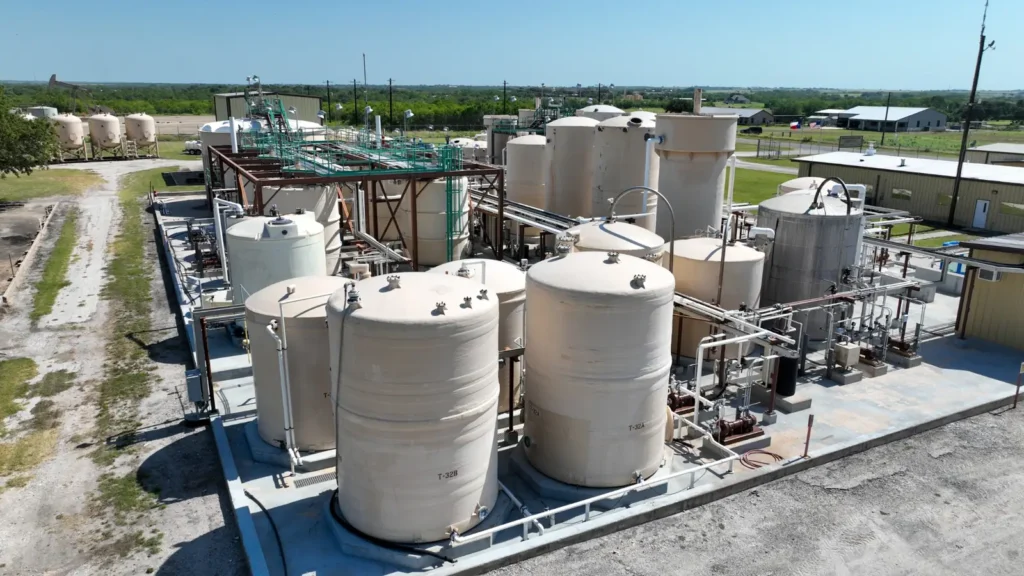
A tank inspection gets expensive fast when access is difficult, downtime is tight, and the asset owner still needs clear, defensible findings. That is exactly why more operators are asking how to inspect tanks with drones instead of relying only on lifts, rope access, or confined-space entry for every scope.
For industrial facilities, terminals, energy operators, and engineering teams, the value is not the aircraft itself. The value is better field data with less exposure, faster mobilization, and documentation that supports maintenance decisions. Drone-based tank inspection works best when it is planned around the asset, the defect types you need to identify, and the kind of deliverable your team can actually use.
What drone tank inspection is really for
Drone inspection is not a one-size-fits-all replacement for traditional methods. It is a way to capture visual, thermal, and measurable condition data on storage tanks and related structures with less disruption to operations. In many cases, it reduces the amount of manual access needed. In some cases, it helps determine whether a more invasive inspection is even necessary.
That matters on above-ground storage tanks, fixed-roof tanks, floating-roof tanks, fire water tanks, process vessels, and secondary containment areas. Teams often use drones to document roof condition, shell defects, coating failure, corrosion, seam issues, appurtenances, stairways, handrails, vents, and signs of leakage or heat anomalies. If methane or hydrocarbon emissions are part of the concern, specialized payloads can also support gas leak detection workflows.
The main advantage is speed with visibility. The trade-off is that drones do not eliminate every inspection limitation. If the scope requires direct wall thickness readings, internal ultrasonic testing, or hands-on repair verification, a drone supports that process but does not replace it.
How to inspect tanks with drones the right way
The right workflow starts before the aircraft ever leaves the ground. Most problems in drone inspection come from weak planning, not weak flying.
Start with the inspection objective
A tank can be inspected for very different reasons. One owner may need a rapid visual condition assessment after a storm. Another may need repeatable imagery for corrosion monitoring across multiple assets. Another may be preparing for maintenance budgeting, insurance documentation, or regulatory review.
That objective changes everything – the aircraft type, the sensor package, the flight path, the resolution requirement, and the final deliverable. If the goal is crack or coating assessment, close-range high-resolution visual capture matters most. If the goal is finding moisture intrusion, overheating, or insulation issues, thermal imaging may be part of the scope. If emissions are the concern, the inspection plan has to account for the right gas imaging technology and environmental conditions.
Evaluate the tank environment
Tank farms and industrial sites are rarely simple flight environments. You may be dealing with tight clearances, nearby steel structures, electromagnetic interference, active operations, vapor concerns, wind exposure, or restricted access zones. A proper site review identifies takeoff and landing areas, obstacles, emergency procedures, and whether flight operations can be conducted safely without interrupting the facility.
This is also where regulatory and client safety requirements come into play. Commercial tank inspections should be handled under FAA-compliant operations, with any required authorizations or waivers addressed before deployment. On industrial sites, the flight crew also needs to align with site-specific safety rules, permit procedures, and communication protocols.
Match the payload to the defect
Not every tank inspection needs the same sensor. Standard RGB imaging is still the baseline because it provides the clearest visual record of surface condition. High-resolution imagery can reveal coating breakdown, rust, deformation, fastener issues, and other visible defects when captured at the right distance and angle.
Thermal imaging adds another layer, but only when used correctly. It can help identify moisture intrusion, heat loss, product temperature irregularities, or areas behaving differently from surrounding surfaces. Thermal results depend on timing, weather, tank contents, and surface materials, so it has to be planned with intent rather than added as a generic extra.
For some facilities, optical gas imaging or methane-focused workflows may also be relevant around tank batteries and related infrastructure. That requires specialized equipment and operators who understand emissions documentation, not just general aerial photography.
Build a repeatable flight plan
If the inspection needs to support asset management over time, consistency matters as much as image quality. A good tank inspection flight is methodical. The pilot captures the roof, shell, rim, nozzles, stairs, platforms, and support features in a way that can be repeated on future visits.
That repeatability helps engineering and maintenance teams compare change over time instead of reviewing a different set of photos after every deployment. Consistent altitude, standoff distance, overlap, and camera angle make it easier to spot progression in corrosion, coating loss, or structural wear.
What the field execution should look like
Once on site, the inspection should move with a clear sequence. The crew verifies conditions, completes the safety review, confirms sensor settings, and performs a controlled exterior capture of the tank system. For large assets, that usually means a combination of wide context images and tight-detail passes.
The best operators are not simply collecting attractive footage. They are collecting evidence. That means image clarity, proper exposure, stable positioning, and enough coverage to support a maintenance or engineering decision later. It also means documenting anomalies with context so the client knows exactly where the issue is located.
Weather can change the quality of the result. Wind affects proximity work. Harsh midday sun can create visual glare and thermal distortion. Rain, vapor, and poor contrast can limit what the data shows. When conditions are not right, the practical decision is often to reschedule instead of forcing a poor-quality capture.
Where drones add the most value on tank assets
The strongest use case is exterior inspection where access would otherwise require scaffolding, lifts, or extended field labor. Roof condition checks are a common example. Instead of sending personnel into a more exposed position just to determine whether follow-up work is needed, a drone can document coating wear, standing water patterns, seam condition, rim areas, and visible damage quickly.
Shell inspections are another high-value application, especially on large tanks where circumference and height make manual visual checks slow and inconsistent. Drones can also support post-event documentation after hail, wind, fire exposure, or suspected impact damage.
For operators managing multiple tanks, drones are especially useful when the goal is prioritization. Not every asset needs the same level of intervention. Decision-grade visual data helps maintenance teams identify which tanks need closer NDT follow-up, which can remain in service, and which should move up the repair schedule.
Limits, trade-offs, and where expectations need to stay realistic
A drone inspection is powerful, but it is not magic. Surface staining may look like active corrosion until it is reviewed closely. Thermal anomalies may suggest an issue without confirming the exact cause. Interior conditions usually require a different method altogether unless the specific tank, access point, and safety conditions support internal drone operations.
There is also a difference between collecting images and producing usable deliverables. Many drone vendors can provide photos. Far fewer provide organized defect documentation, mapped image sets, annotated findings, and reporting that aligns with engineering or maintenance workflows. For commercial clients, that difference matters more than the flight itself.
This is where scope discipline helps. If the expected output is a screening tool, drone inspection may be all you need at that stage. If the expected output is code-based structural certification, the drone is part of the process, not the entire process. The right provider should say that clearly.
The deliverables that make tank inspections useful
If you are evaluating how to inspect tanks with drones for a real operation, focus on the output before you focus on the aircraft. The most useful deliverables usually include high-resolution stills, organized location-based photo sets, thermal images when applicable, annotated defect callouts, and a concise inspection report that identifies observed conditions and recommended next actions.
For repeat inspections, side-by-side historical comparison can be just as valuable as the latest image set. Engineering-ready deliverables should make it easier to assign work, justify maintenance spending, support insurers, or document compliance activity. If the data cannot move directly into your operating workflow, it is only partially useful.
For tank owners and operators, the practical question is not whether drones are modern or efficient. It is whether they reduce field exposure, shorten decision time, and improve the quality of what your team sees. When the inspection is planned around those outcomes, drone deployment becomes more than a visual check – it becomes a faster path to action.